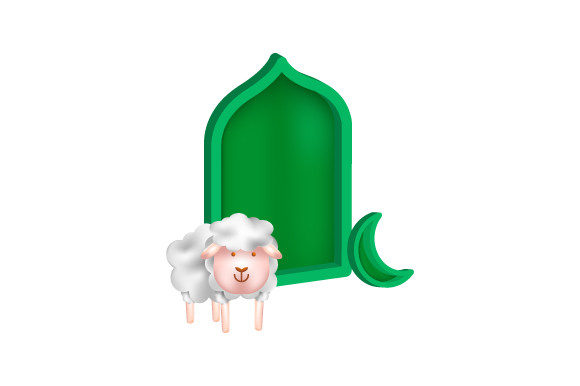
3d Eid Al Adha Design Vector Isolated
Selecting the right visual assets for your holiday campaigns requires more than just finding a pretty image. When you are looking for a 3d Eid Al Adha design vector isolated, you are likely aiming for high-quality graphics that stand out without cluttering your layout. The term "isolated" is critical here, as it implies a clean separation from any background, giving you total control over how the design integrates into your projects. Whether you are a marketer planning a social media blast or a small business owner creating promotional flyers, understanding the nuances of these files can save you hours of editing and ensure your final output looks professional.
Many creators rush to download 3D assets without verifying their technical specifications, often leading to frustrating results later. A common pitfall involves assuming that all "vector" files behave the same way. While vectors are scalable, not all 3D representations within vector formats retain their depth perfectly when converted to flat images like JPGs. This distinction matters significantly when you need crisp edges for printing or sharp details for digital screens.
Navigating File Formats: AI, EPS, JPG, and PNG
The value of a design asset is often hidden in its file extensions. The package you are considering typically includes four distinct formats: AI, EPS, JPG, and PNG. Each serves a specific purpose, and using them incorrectly can compromise your project's quality.
- AI and EPS: These are native vector formats used by Adobe Illustrator. They are essential if you plan to edit the design further, change colors, or scale the object up to billboard size without losing resolution. However, opening these files requires compatible software. If you are a blogger or freelancer working on a tight deadline, relying solely on these formats might slow you down if you don't have the necessary tools installed.
- PNG: This format is ideal for web use because it supports transparency. When you need a 3d Eid Al Adha design vector isolated to place over a colorful background on a website or Instagram story, the PNG ensures no white box surrounds your graphic. It preserves the isolation perfectly while maintaining high resolution.
- JPG: While universally compatible, JPG files do not support transparency. They also use lossy compression, which can introduce artifacts around the edges of complex 3D shapes. Using a JPG version of an isolated design for a layered composition will force you to manually remove the background, a tedious process that rarely yields perfect results.
A frequent mistake is treating the JPG included in a bundle as a primary source for editing. It should only be used as a quick preview or for simple print jobs where transparency is not required. Always start with the AI or EPS file for maximum flexibility.
Common Pitfalls in 3D Vector Selection
Even with the correct file types, several subtle errors can undermine the effectiveness of your holiday designs. One of the most overlooked aspects is lighting consistency. A 3d Eid Al Adha design vector isolated often features shadows and highlights designed to look realistic against a neutral backdrop. When you place this element onto a busy background or a different colored surface, the original lighting may clash with the new environment, making the graphic look "stuck on" rather than integrated.
To avoid this, check the shadow direction and intensity in the original file before downloading. If your project requires a specific mood, you may need to adjust the lighting properties in your design software. Failing to do so can result in a disjointed presentation that distracts viewers rather than celebrating the occasion.
Another issue arises from the complexity of the 3D mesh. Some designers create highly detailed models that look stunning at full resolution but become pixelated or sluggish when exported for web use. If you are targeting mobile users, who make up a vast portion of holiday traffic, heavy 3D files can increase load times. In such cases, optimizing the rasterized versions (PNG) is crucial. Ensure the dimensions are appropriate for the platform; a massive 4K image is unnecessary for a thumbnail and wastes bandwidth.
Evaluating Quality Before You Commit
Before purchasing or downloading a set of graphics, take a moment to inspect the sample previews closely. Look for jagged edges, especially around intricate details like animal horns, fabric folds on clothing, or decorative patterns often associated with Eid Al Adha. Poorly rendered vectors can appear blocky when scaled, ruining the premium feel you want to convey.
Additionally, verify the color modes. Professional print materials require CMYK color profiles, while digital content uses RGB. If you buy a vector intended for screen display and try to print it without conversion, the colors may shift unexpectedly. Conversely, using a CMYK file for a website can sometimes lead to muted colors depending on the browser rendering. Check the metadata or product description to confirm the color space matches your intended medium.
For entrepreneurs and educators, there is also the consideration of licensing. Ensure that the license allows for commercial use if you plan to sell products featuring the design or use it in paid advertisements. Misunderstanding usage rights can lead to legal complications down the line. Always read the fine print regarding attribution and redistribution.
Best Practices for Integration
Once you have secured your files, the key to success lies in thoughtful integration. Start by placing the 3d Eid Al Adha design vector isolated in your workspace using the AI or EPS file. This gives you the ability to tweak the 3D perspective or adjust the lighting effects directly within the vector editor. If you need to change the color scheme to match your brand guidelines, the vector format makes this instantaneous.
When moving to the final export stage, choose the PNG format for any application requiring a transparent background. This maintains the "isolated" nature of the design, allowing it to float naturally above your text or other graphical elements. For print materials, utilize the high-resolution capabilities of the EPS file to ensure every curve and highlight remains sharp.
Consider the context of your audience. For younger demographics engaging with social media, a vibrant, slightly exaggerated 3D style works well. For more formal communications, such as corporate newsletters or educational materials, opt for a cleaner, more subdued interpretation of the design. Adjusting the opacity or adding a subtle drop shadow can help ground the 3D element, making it feel part of the scene rather than floating arbitrarily.
By paying attention to these details, you transform a simple graphic download into a powerful tool for communication. The difference between a generic holiday post and a standout campaign often comes down to the quality of the assets and the care taken in their application. Avoid the trap of using low-resolution previews for final outputs, and always prioritize the editable vector formats for long-term versatility.
Remember that the goal of using a 3d Eid Al Adha design vector isolated is to enhance your message, not distract from it. With the right combination of AI, EPS, JPG, and PNG files, and a clear understanding of how to handle them, you can create visuals that honor the spirit of the holiday while meeting your professional standards. Take the time to evaluate your options, respect the technical limitations of each format, and your designs will reflect the care and precision your audience deserves.