Bacteria Shapes Types Realistic Color Visual Guide
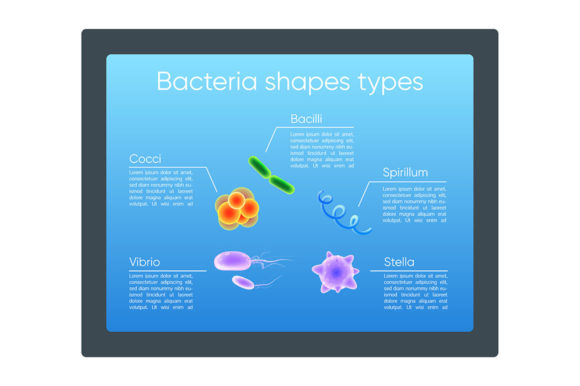
Understanding the microscopic world often requires more than just a textbook definition; it demands a visual representation that captures the complexity and diversity of life at the cellular level. Bacteria Shapes Types Realistic Color refers to a specialized collection of high-fidelity illustrations designed to depict various microbial forms with scientific accuracy and aesthetic appeal. These visuals go beyond simple diagrams, offering a 3D-rendered perspective that brings concepts like cocci, bacilli, and spirilla to life. Whether you are an educator preparing a lecture or a marketer designing a health campaign, these assets provide a bridge between complex biological data and clear, engaging communication.
The core value of this resource lies in its ability to merge educational precision with modern design trends. By utilizing Bacteria shapes types realistic color vector informational infographic template elements, creators can produce content that is both visually stunning and factually grounded. The inclusion of 3D illustrations adds depth, allowing viewers to appreciate the texture and structure of microbes in a way that flat drawings cannot achieve. This approach transforms dry scientific facts into captivating visual stories, making it easier for audiences to retain information about different bacterial classifications.
Why Realistic Microbe Illustrations Matter
In an era where attention spans are short, static black-and-white line drawings often fail to engage modern audiences. People are drawn to images that look authentic and detailed. When discussing topics related to health, hygiene, or biology, the use of Bacteria Shapes Types Realistic Color imagery helps establish credibility. It signals that the content creator has invested time in presenting accurate representations of the subject matter.
These illustrations serve several critical functions:
- Enhanced Comprehension: The three-dimensional aspect allows learners to visualize how bacteria interact with their environment, such as how a rod-shaped bacillus might move differently than a spherical coccus.
- Aesthetic Engagement: The realistic coloring—often using vibrant yet scientifically plausible hues—makes the content more inviting. It turns a potentially intimidating topic into something fascinating and approachable.
- Professional Polish: For businesses and professionals, using high-quality vector graphics ensures that materials look premium and trustworthy, which is essential for building brand authority.
Practical Applications Across Industries
The versatility of Bacteria shapes types realistic color vector informational infographic template assets makes them suitable for a wide range of applications. They are not limited to academic settings but have found significant utility in commercial and creative sectors as well.
Educational Materials and Presentations
Educators and students frequently struggle to find visuals that balance accuracy with clarity. A standard PowerPoint slide filled with text can be overwhelming, but integrating a 3D illustration of different Bacteria Shapes Types Realistic Color can instantly clarify a lesson on microbiology. Teachers can use these images to explain the differences between Gram-positive and Gram-negative bacteria, or to illustrate how antibiotics target specific shapes. The ability to edit these vector files means instructors can customize colors or labels to suit their specific curriculum needs without losing image quality.
Digital Marketing and Advertising
Healthcare companies, pharmaceutical firms, and wellness brands often need to communicate complex ideas quickly. An advertising flyer or info banner featuring Bacteria Shapes Types Realistic Color graphics can effectively highlight the importance of sanitation products or new medical treatments. Instead of generic stock photos, these tailored 3D illustrations allow marketers to create unique campaigns that stand out. For example, a leaflet promoting a hand sanitizer could feature a dramatic, realistic rendering of bacteria being neutralized, creating a powerful visual narrative that resonates with consumers.
Print Media and Publications
For bloggers, journalists, and authors, the availability of these assets in both EPS (vector) and JPG (raster) formats within a convenient ZIP file offers immense flexibility. A blogger writing about the gut microbiome can embed a high-resolution JPG directly into their article, while a magazine editor might use the EPS file to print a full-page poster or booklet spread. The scalability of vector graphics ensures that whether the image appears on a small mobile screen or a large billboard, it remains crisp and professional.
Key Features of the Design Template
The Bacteria shapes types realistic color vector informational infographic template is built with the user in mind. It is not just a collection of images but a comprehensive toolkit for design. The inclusion of 3D illustrations provides a modern touch that distinguishes the content from traditional clip art. These models capture the intricate surface details of microbes, giving them a tangible presence.
Furthermore, the format variety is a significant advantage. The ZIP file containing both EPS and JPG files caters to different workflow requirements. Vector files (EPS) are ideal for designers who need to resize images, change colors, or integrate them into larger layouts without any loss of resolution. Raster files (JPG) are perfect for quick insertion into documents, websites, or social media posts where editing capabilities are less critical than immediate usability.
Considerations for Effective Usage
While these resources are powerful, there are important factors to consider when incorporating Bacteria Shapes Types Realistic Color into your projects. First, ensure that the artistic interpretation aligns with your intended message. While realism is key, the colors used should remain scientifically plausible to maintain trustworthiness. Avoid altering the fundamental shapes of the bacteria, as this could lead to misinformation.
Secondly, consider your audience's familiarity with the subject. If you are creating content for young children, you might pair these realistic images with simplified explanations. Conversely, for professional or academic audiences, the detailed nature of the 3D illustrations can support more advanced discussions about microbial morphology and pathogenicity.
Finally, respect licensing agreements. Even if the files are part of a personal project, always verify the terms of use regarding commercial distribution. Proper attribution and adherence to guidelines will protect your work and ensure ethical usage of the intellectual property.
Conclusion: Elevating Your Visual Communication
In summary, Bacteria Shapes Types Realistic Color represents a significant leap forward in how we visualize the microscopic world. By combining scientific accuracy with high-end 3D design, these assets empower creators to produce materials that are both informative and visually compelling. From classroom posters and PPT presentations to marketing flyers and digital banners, the potential applications are vast. Embracing these tools allows educators, entrepreneurs, and hobbyists alike to communicate complex biological concepts with clarity and style, ultimately fostering a deeper understanding of the invisible world around us.