3D Live Stream YouTube Design Concept: A Strategic Guide for Content Creators
In the rapidly evolving landscape of digital content creation, visual identity is no longer just a supplementary element; it is a fundamental component of viewer retention and brand recognition. The 3D Live Stream YouTube Design Concept represents a significant shift from traditional 2D overlays to immersive, spatially aware environments that engage audiences on a deeper level. For creators aged 20 to 50 who are actively evaluating their production strategies, understanding the nuances of this design approach is essential for making informed decisions about resource allocation and technical implementation.
This article provides a comprehensive evaluation of the 3D live stream aesthetic, analyzing its distinct characteristics, practical applications, and how it compares to alternative design methodologies. By examining the tradeoffs between complexity and impact, we aim to help you determine whether this specific design concept aligns with your channel's goals and technical capabilities.
Distinguishing Features of the 3D Live Stream Design Concept
The core distinction of the 3d Live Stream Youtube Design Concept lies in its ability to simulate depth, perspective, and physical space within a two-dimensional video frame. Unlike standard flat graphics or static overlays, a 3D design environment creates an illusion of volume. This is achieved through advanced rendering techniques that manipulate lighting, shadows, textures, and camera angles to produce objects that appear to exist in a virtual room alongside the streamer.
When implemented effectively, this concept transforms a simple webcam feed into a dynamic set. Viewers perceive the content as if they are sitting in a dedicated studio, which significantly enhances the sense of presence. The visual language moves beyond simple branding; it becomes an interactive stage where elements can rotate, float, or respond to user input. This spatial awareness allows for more creative storytelling, as designers can place information hierarchically in three dimensions rather than being confined to a linear horizontal layout.
A critical aspect of this design style is its versatility across different file formats. The availability of files in AI, EPS, JPG, and PNG ensures that the assets are compatible with various stages of the production pipeline. Vector formats like AI and EPS allow for infinite scalability without loss of quality, which is crucial when resizing assets for different screen resolutions. Meanwhile, raster formats such as JPG and PNG provide ready-to-use textures and background layers that can be integrated directly into streaming software.
Evaluating Alternatives: 3D vs. Traditional 2D Overlays
To make a sound decision, one must compare the 3D approach against the more conventional 2D overlay systems that have dominated the platform for years. Traditional designs typically consist of flat images layered over the video feed. While these are lightweight and easy to implement, they often lack the engagement factor required to stand out in a saturated market.
- Visual Impact: The 3D Live Stream YouTube Design Concept offers a premium look that immediately signals high production value. In contrast, 2D designs can sometimes appear dated or generic unless heavily customized. The depth provided by 3D models captures attention more effectively, reducing the likelihood of viewers scrolling past.
- Technical Complexity: The primary tradeoff is the computational cost. Rendering real-time 3D environments requires more processing power from the computer running the streaming software. Standard 2D overlays are virtually free on the CPU/GPU front end, making them accessible for users with older hardware.
- Customization Potential: While 2D graphics offer flexibility in terms of color and text changes, they cannot easily simulate movement or perspective shifts. The 3D concept allows for dynamic interactions, such as rotating product showcases or animated transitions that feel organic rather than jarring.
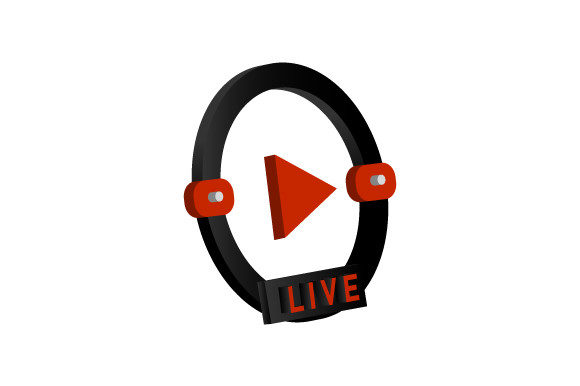
However, it is important to note that the 3d Live Stream Youtube Design Concept isolated on white background serves a unique purpose that differs from a fully rendered scene. When used as a decorative element, the isolated asset allows creators to layer 3D objects onto any background without clipping issues. This hybrid approach combines the best of both worlds: the visual richness of 3D modeling with the simplicity of 2D compositing.
Practical Applications and Best-Fit Scenarios
Understanding when to utilize this design concept is just as important as knowing how to build it. The 3D aesthetic is not universally applicable to every genre of content. Its effectiveness depends heavily on the nature of the channel and the expectations of the target audience.
Gaming and Esports
For gaming channels, the 3D Live Stream YouTube Design Concept is particularly potent. Gamers are accustomed to navigating complex 3D interfaces within games themselves. A stream that mirrors this visual language feels native and cohesive. Using 3D assets to represent health bars, character stats, or game objectives can create a seamless integration between the gameplay footage and the commentary overlay.
Tech Reviews and Product Showcases
Creatives focusing on technology or unboxing videos benefit immensely from the ability to rotate and inspect products in a virtual space. Instead of showing a static image of a gadget, a designer can use the available assets to create a floating 3D model that rotates automatically. This provides a clearer view of the product features than a handheld camera shot might allow.
Education and Tutorials
In educational content, 3D elements can simplify complex concepts. Visualizing data, scientific models, or architectural plans in three dimensions helps learners grasp spatial relationships that are difficult to convey with flat diagrams. The isolation of these elements on a white background allows for clean, distraction-free presentations that focus entirely on the instructional material.
Navigating Tradeoffs and Limitations
While the benefits are clear, a realistic evaluation must address the limitations inherent in adopting a 3D-centric workflow. One of the most significant challenges is the learning curve. Creating or manipulating 3D scenes requires proficiency in specialized software, which may differ from the standard tools used for 2D graphic design. Creators must decide whether to invest time in learning new skills or to purchase pre-made assets.
Performance stability is another critical factor. If the streaming PC struggles to render the 3D environment in real-time, the result can be dropped frames, stuttering audio, or crashes during a live broadcast. This risk is higher when using complex scenes with multiple light sources and high-resolution textures. To mitigate this, many creators opt to use pre-rendered video loops for certain 3D elements while keeping the live interaction components lightweight.
Furthermore, accessibility considerations should not be overlooked. High-contrast 3D effects and rapid movements can be distracting or even problematic for viewers with sensory sensitivities. It is vital to balance the visual flair with clarity and readability. Text overlaid on complex 3D backgrounds must remain legible, requiring careful selection of fonts and colors.
Decision Factors for Implementation
Before committing to the 3D Live Stream YouTube Design Concept, creators should assess their current resources and long-term goals. The following factors serve as a checklist for making this strategic choice.
- Hardware Capability: Does your setup have sufficient GPU power to handle real-time 3D rendering without compromising stream quality? If not, consider using pre-rendered assets or lowering the complexity of the scene.
- Brand Consistency: Will a 3D aesthetic align with your channel's personality? Some brands thrive on minimalism and 2D simplicity, while others lean towards futuristic or immersive themes.
- Asset Management: Do you have access to the necessary file formats (AI, EPS, JPG, PNG) to integrate these designs seamlessly? Having a robust library of vector and raster assets simplifies the workflow significantly.
- Audience Expectations: Analyze your viewership demographics. Younger audiences may expect high-fidelity visuals, while older demographics might prioritize clear audio and straightforward layouts over flashy graphics.
The inclusion of files in multiple formats like AI and EPS is a strategic advantage for those planning to scale their operations. These vector formats ensure that logos and icons remain crisp regardless of the display size, which is crucial for maintaining professionalism across mobile devices, tablets, and large monitors. Conversely, JPG and PNG files offer immediate usability for quick edits or temporary overlays.
Conclusion on Strategic Selection
The decision to adopt a 3D Live Stream YouTube Design Concept is a balance between artistic ambition and technical pragmatism. It offers a powerful tool for differentiation in a crowded marketplace, providing depth and immersion that flat designs simply cannot match. However, it demands a higher investment of time, skill, and computing resources.
For creators willing to navigate the complexities, the payoff is a visually stunning experience that elevates the perceived value of their content. Whether used as a full immersive environment or as isolated decorative elements on a white background, the 3D design concept adds a layer of sophistication that resonates with modern audiences. By carefully weighing the pros and cons, and selecting the right mix of file formats and rendering techniques, you can harness the full potential of this design approach to enhance your streaming career.