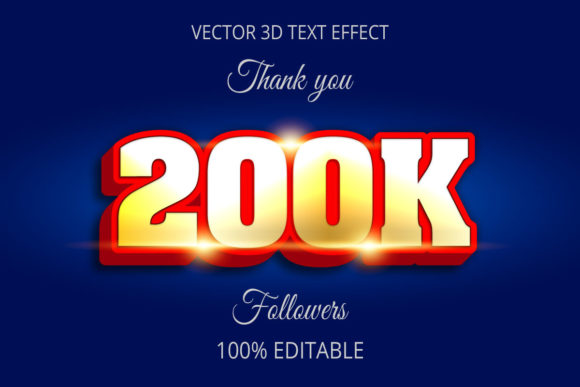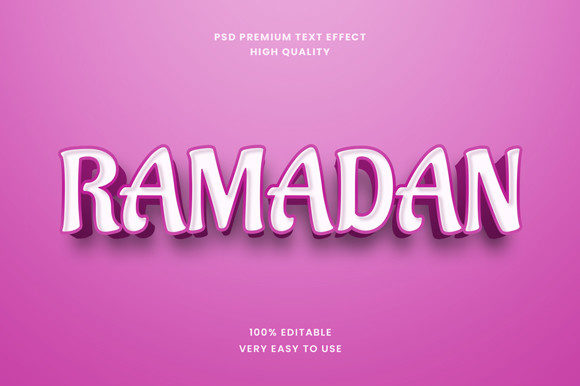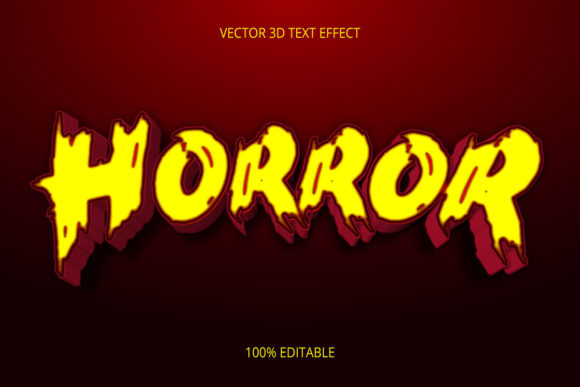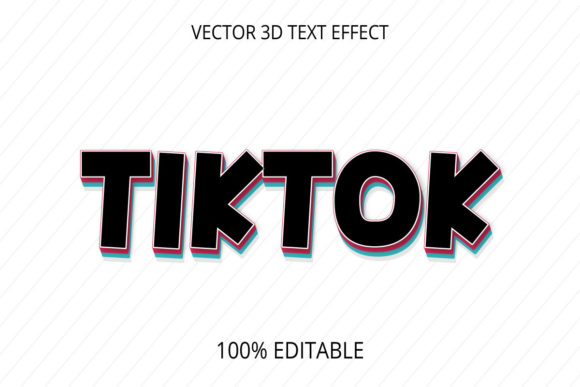
Elevating Digital Narratives: The Strategic Power of 100k 3d Text Effect Creative Design
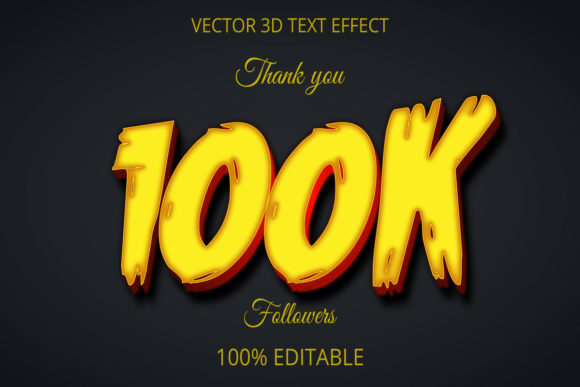
In an era where digital attention spans are measured in milliseconds, the visual hierarchy of a brand's message has never been more critical. Professionals across marketing, creative arts, and entrepreneurship are constantly seeking methods to disrupt the monotony of flat interfaces. This pursuit has led to a significant resurgence in depth and dimensionality within typography. At the forefront of this movement is the 100k 3d text effect creative design, a sophisticated approach that transforms static letters into immersive architectural elements.
This article explores how this specific design aesthetic is reshaping user engagement, why it is becoming a staple in modern workflows, and what it signifies for the future of digital communication. By moving beyond simple decoration, we uncover how 100k 3d text effect creative design serves as a bridge between artistic expression and functional usability.
Defining the Phenomenon: More Than Just Depth
To understand the impact of 100k 3d text effect creative design, one must first distinguish it from the rudimentary extrusions of the early web days. The "100k" moniker in this context does not refer to a literal count or a specific software version number; rather, it represents a benchmark for high-fidelity, complex, and highly polished execution. It implies a level of detail where lighting, shadow, texture, and perspective are meticulously calibrated to create a tangible sense of weight and presence.
Traditional flat design prioritized minimalism and speed, stripping away gradients and shadows to ensure clarity. However, as screens become higher resolution and users crave richer experiences, the pendulum has swung back toward complexity. The 100k 3d text effect creative design utilizes advanced rendering techniques to simulate real-world physics within a digital space. This includes realistic material properties—such as brushed metal, frosted glass, or matte plastic—and dynamic lighting conditions that respond to the viewer's perspective.
This style is not merely about making text look "cool." It is about creating a tactile invitation for the user. When a headline appears with the weight and sheen characteristic of high-end 3D design, it signals quality and investment. It suggests that the content behind the text is substantial, mirroring the effort put into its presentation.
Aligning with Industry Trends and Consumer Psychology
The rise of 100k 3d text effect creative design is inextricably linked to broader shifts in technology and consumer behavior. We are currently witnessing the maturation of WebGL and WebGPU technologies, which allow browsers to render complex three-dimensional graphics without requiring heavy plugins. This technological democratization means that designers can now integrate these effects directly into websites and applications, ensuring they are accessible on both desktop and mobile devices.
From a psychological standpoint, human brains are hardwired to process three-dimensional objects faster than two-dimensional shapes. In a crowded marketplace, a 3D text element acts as a natural focal point. It breaks the grid, drawing the eye immediately. For entrepreneurs and marketers, this translates to higher click-through rates and improved retention times. The 100k 3d text effect creative design leverages this cognitive bias to guide user attention exactly where the business needs it.
Furthermore, the trend aligns with the growing popularity of spatial computing and augmented reality (AR). As users become accustomed to interacting with holographic interfaces and AR filters, their expectations for digital content evolve. They begin to expect a level of immersion that flat design cannot provide. By adopting 100k 3d text effect creative design, brands position themselves at the cutting edge of this spatial shift, signaling to their audience that they are forward-thinking and innovative.
The Shift in Workflow and Expectations
The adoption of this design style has also necessitated changes in professional workflows. Historically, creating high-quality 3D typography required specialized skills in software like Blender or Cinema 4D, followed by time-consuming rasterization processes. Today, the barrier to entry is lower, but the expectation for quality is higher. Designers are expected to deliver interactive 3D elements that load quickly and scale responsively.
This shift has given rise to a new hybrid skill set. Modern creatives must understand not only the aesthetics of 3D modeling but also the principles of performance optimization. A 100k 3d text effect creative design that takes ten seconds to load defeats its purpose. Consequently, professionals are increasingly utilizing procedural generation tools and optimized shaders to achieve high-fidelity results without compromising site speed. This balance between visual richness and technical efficiency is now a key metric for success in the industry.
Practical Applications Across Sectors
The versatility of 100k 3d text effect creative design allows it to be applied across various sectors, each leveraging its unique strengths. Let us examine how different professionals are utilizing this technique to achieve specific outcomes.
- Branding and Identity: Logos and brand names are being reimagined with volumetric depth. A tech startup might use metallic, angular 3D typography to convey precision and engineering prowess, while a lifestyle brand might opt for soft, organic shapes with pastel gradients to evoke warmth and approachability. The 100k 3d text effect creative design allows for infinite customization to match brand voice.
- Digital Advertising: In banner ads and social media stories, static images often get scrolled past. Dynamic 3D text that rotates or reacts to mouse movement captures attention instantly. Marketers are finding that campaigns featuring high-fidelity 3D typography see significantly higher engagement metrics compared to their 2D counterparts.
- E-commerce and Product Visualization: Retailers are using 3D text effects to highlight product features or promotional offers. Imagine a "Sale" tag that looks like a physical object hanging from a hook, complete with realistic shadows and reflections. This creates a sense of urgency and tangibility that encourages immediate action.
- Entertainment and Gaming: The gaming industry has long utilized 3D text, but the influence is spilling over into general web design. Cinematic title sequences and interactive landing pages for movies or game launches utilize 100k 3d text effect creative design to build atmosphere and narrative depth before the user even clicks a button.
Observations on User Interaction
One of the most profound observations regarding this design trend is the change in user interaction patterns. Users no longer passively consume content; they expect to interact with it. When a 3D text element is designed correctly, it invites manipulation. Hover effects that rotate the text, change its color based on light direction, or even distort it slightly under the cursor create a micro-interaction loop. This feedback mechanism makes the digital experience feel alive and responsive.
For freelancers and independent creators, mastering this aesthetic is a powerful differentiator. Clients are increasingly looking for designs that stand out in a saturated market. Offering 100k 3d text effect creative design as a service elevates a freelancer's portfolio, demonstrating technical proficiency and an understanding of modern visual trends.
Future Outlook: Integration and Immersion
Looking ahead, the trajectory of 100k 3d text effect creative design points toward deeper integration with immersive technologies. As virtual reality (VR) and mixed reality (MR) headsets become more common, the distinction between web content and physical space will blur. Typography in these environments will need to be inherently three-dimensional to be legible and aesthetically pleasing from any angle.
We can anticipate a future where text is not just displayed on a screen but exists within a 3D space that the user navigates. The principles established today by the 100k 3d text effect creative design community will form the foundation of this new digital architecture. Lighting engines will become standard in browser-based tools, allowing for real-time ray tracing of text elements. This will enable designers to create scenes where text interacts dynamically with other 3D objects, casting shadows and reflecting light in real-time.
Moreover, the emphasis on accessibility will remain paramount. While the goal is visual impact, the 100k 3d text effect creative design must not compromise readability. Future developments will likely focus on smart algorithms that adjust contrast, size, and depth automatically based on the user's environment and visual needs. This ensures that the aesthetic appeal does not come at the cost of inclusivity.
Conclusion: A Necessary Evolution
The journey from flat design to rich, dimensional typography is not a rejection of the past but an evolution driven by technological capability and user demand. The 100k 3d text effect creative design represents a maturation of digital aesthetics, offering a way to communicate value, depth, and innovation simultaneously. For professionals, creators, and entrepreneurs, embracing this style is about more than following a trend; it is about meeting the evolving expectations of a visually literate audience.
As we move further into a digital-first world, the ability to craft compelling, three-dimensional narratives will be a defining skill. Whether used to anchor a brand identity, drive a marketing campaign, or enhance a user interface, the strategic application of 3D text effects offers a competitive edge. By understanding the nuances of 100k 3d text effect creative design, stakeholders can ensure their visual communications remain relevant, engaging, and impactful in an ever-changing landscape.
The future of digital design is three-dimensional, and those who master the art of depth today will lead the conversation tomorrow.