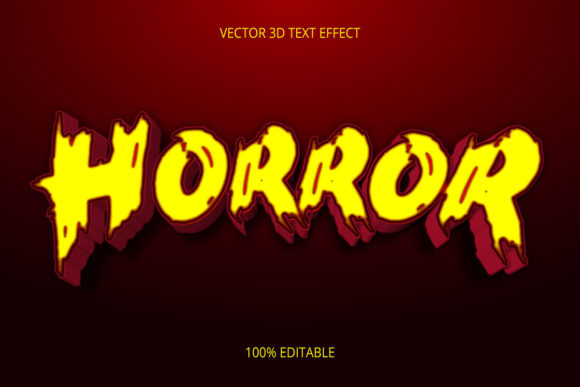
Mastering the Art of Horror 3d Text Effect Creative Design for Digital Impact
In the rapidly evolving landscape of digital media, visual communication has transcended simple typography. The modern web and social platforms demand immediate engagement, a visceral reaction that static fonts simply cannot provide. This is where Horror 3d text effect creative design emerges as a powerful tool, bridging the gap between graphic design principles and psychological impact. By manipulating depth, texture, lighting, and distortion, designers can transform ordinary words into terrifying artifacts that haunt the viewer's mind long after they have scrolled past.
This approach is not merely about making text look scary; it is a sophisticated application of spatial reasoning and material simulation. Whether you are a professional motion designer crafting a film trailer, a business owner launching a Halloween marketing campaign, or an educator creating interactive learning modules, understanding the mechanics behind these effects opens a new frontier in storytelling. The following exploration delves into the technical and artistic nuances required to execute this style effectively, ensuring your content stands out with authority and creativity.
The Psychology Behind Fearful Typography
To create compelling horror designs, one must first understand why certain visual cues trigger fear. Human perception is wired to detect anomalies and threats in our environment. When applied to typography, this instinctual response can be harnessed through specific design choices. The core of Horror 3d text effect creative design lies in the subversion of safety. We are accustomed to clean, legible, and predictable typefaces. Disrupting this expectation creates cognitive dissonance, which the brain often interprets as a warning signal.
- Depth and Encroachment: In a 3D environment, text that appears to protrude towards the viewer can feel invasive. It breaks the "fourth wall" of the screen, creating a sense of physical presence that heightens tension.
- Materiality and Decay: A smooth plastic font feels artificial and safe. Conversely, a font rendered with textures like rusted iron, wet bone, or peeling flesh suggests age, neglect, and organic decay. These materials carry inherent narratives of danger.
- Lighting and Shadow: High-contrast lighting (chiaroscuro) is essential. Deep shadows hide details, forcing the imagination to fill in the blanks, while harsh spotlights expose imperfections. This interplay directs the eye and controls the pacing of the reveal.
By integrating these psychological triggers, designers move beyond aesthetics into the realm of emotional manipulation. The goal is not just to inform the audience but to make them feel the atmosphere of the narrative before a single scene plays out.
Technical Foundations of Three-Dimensional Rendering
Creating realistic horror typography requires a robust grasp of 3D modeling and rendering software. While the final output might be a static image or a video frame, the process involves building a virtual space. Professionals typically utilize tools such as Blender, Cinema 4D, or Maya to extrude standard vector shapes into volumetric forms. However, the magic happens in the post-processing stage where the raw geometry is transformed into something grotesque.
The workflow for achieving high-quality Horror 3d text effect creative design generally follows a structured path. First, the base mesh is created with sufficient subdivisions to allow for deformation. Unlike standard branding work where sharp edges are preferred, horror text often benefits from irregular topology that can be twisted, melted, or eroded. Once the shape is established, the focus shifts to the shader and texture pipeline.
- Geometry Manipulation: Using displacement maps allows designers to carve cracks, scratches, and teeth-like protrusions directly into the letterforms without manually sculpting every detail.
- Texture Mapping: High-resolution photography of real-world grime, blood, slime, or rotting wood is projected onto the 3D model. Normal maps are then used to simulate surface bumps and dents, adding realism even under flat lighting.
- Rigging and Deformation: For animated sequences, text may need to be rigged like a character. This allows for fluid animations where letters drip, stretch, or twist unnaturally, mimicking the behavior of biological matter rather than rigid objects.
- Rendering Engines: Path tracing algorithms are crucial for accurate light bounces and caustics. Realistic glass, wet surfaces, or metallic reflections require physically based rendering (PBR) to ensure the lighting interacts with the texture correctly.
Understanding these technical layers is vital for creators who wish to move beyond pre-made templates. Customization ensures that the final piece is unique and tailored to the specific narrative needs of the project.
Diverse Applications Across Industries
The versatility of 3D horror typography extends far beyond the niche market of the film industry. Its ability to command attention makes it a valuable asset for various sectors, each leveraging the style for different strategic objectives.
Entertainment and Media Production
In the entertainment sector, this design style is ubiquitous. From movie posters and title sequences to video game UI elements, Horror 3d text effect creative design sets the tone immediately. Consider a survival horror game; the HUD elements, weapon names, and mission objectives often utilize distorted 3D text to immerse the player in a world of dread. The text itself becomes part of the diegetic environment, reinforcing the game's atmosphere.
Marketing and Brand Campaigns
Businesses often utilize this aesthetic during seasonal campaigns, particularly around Halloween. However, its use is expanding into broader brand storytelling. A fashion brand launching a dark, edgy collection might use decaying 3D typography to convey rebellion and non-conformity. Similarly, streaming services promoting thriller series rely on these visuals to cut through the noise of crowded app stores and social media feeds. The key here is balancing the horror element with brand recognition so that the message remains clear despite the chaotic styling.
Educational and Research Contexts
Even in educational settings, there is a place for dramatic typography. History educators teaching about the Victorian era or the history of medicine might use 3D text effects to visualize old manuscripts, plague doctor masks, or anatomical drawings. By making historical data visually arresting, educators can increase student engagement and retention. Researchers presenting findings on psychology or neuroscience regarding fear responses might use stylized 3D text to illustrate concepts of neural pathways or emotional processing in a more impactful way.
Considerations for Accessibility and Usability
While the visual impact of Horror 3d text effect creative design is undeniable, it introduces significant challenges regarding accessibility and readability. The very distortions that create fear—warping, low contrast, and complex textures—can hinder comprehension for users with visual impairments or cognitive differences. Therefore, responsible design requires a careful balance between artistry and function.
When implementing these effects, designers must prioritize legibility. If the text is meant to convey critical information, such as a call-to-action button or a headline, it should not be obscured by excessive gore or shadow. Techniques such as adding a subtle glow, increasing the kerning (spacing between letters), or using a secondary, cleaner font for subtitles can help maintain clarity. Furthermore, color contrast ratios must meet WCAG guidelines. Dark red text on a black background, while atmospheric, may fail accessibility standards if the luminance difference is insufficient.
For professional projects, it is advisable to test the design across various devices and under different lighting conditions. What looks terrifying on a large monitor might become illegible on a mobile phone screen. Ensuring that the 3D effect scales well without losing its structural integrity is a hallmark of expert execution.
Emerging Trends and Future Directions
The field of typography is constantly evolving, driven by advancements in technology and shifting cultural trends. Currently, we are seeing a rise in hyper-realism within 3D text effects. With the power of modern GPUs and ray-tracing capabilities, designers can now render text that looks indistinguishable from reality. This trend pushes the boundary of the uncanny valley, where the text appears almost alive, breathing or pulsating.
Another emerging direction is the integration of motion graphics and interactive elements. Static images are being replaced by scroll-triggered animations where the text reacts to user input. As a user scrolls down a page, the 3D text might crack open, bleed, or dissolve, creating a dynamic narrative experience. This interactivity deepens the immersion, making the viewer an active participant in the horror story.
Additionally, the influence of AI-generated textures is growing. Instead of manually photographing surfaces, designers are using generative models to create infinite variations of decay, slime, and corruption. This speeds up the production workflow and allows for a level of complexity that would be impossible to achieve manually. However, this also raises questions about originality and the homogenization of styles.
Conclusion: The Power of Visual Storytelling
Horror 3d text effect creative design represents a convergence of technical skill and artistic vision. It is a discipline that demands respect for the underlying principles of light, physics, and human psychology. Whether used to sell a product, tell a ghost story, or educate a class, the ability to manipulate text into a three-dimensional form of terror offers a unique channel for communication.
As digital environments become increasingly saturated, the creators who can master these techniques will find themselves at the forefront of visual culture. By adhering to best practices in accessibility while pushing the boundaries of aesthetic innovation, designers can craft experiences that are not only frightening but also memorable and meaningful. The future of typography is three-dimensional, and for those willing to explore the darker corners of design, the possibilities are endless.