The Strategic Value of 3D Printing Line Icon Design in Modern Branding
In the rapidly evolving landscape of digital design and manufacturing, the intersection of visual communication and industrial technology has created a unique niche. At the forefront of this convergence is 3D Printing Line Icon Design. This specific aesthetic style represents more than just a visual trend; it is a functional language that bridges the gap between complex engineering concepts and accessible consumer understanding. For professionals, creators, and entrepreneurs navigating the additive manufacturing sector, adopting this design philosophy is not merely an aesthetic choice but a strategic necessity for clear communication.
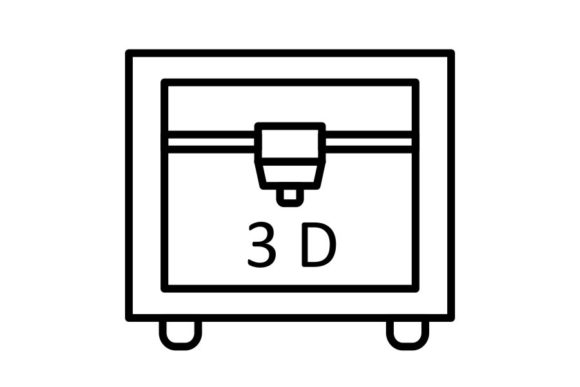
The core of this design approach lies in its ability to distill intricate three-dimensional objects into clean, two-dimensional line art. Unlike heavy, solid illustrations or photorealistic renders that can overwhelm a user interface or clutter a presentation slide, line icons offer clarity and precision. They capture the essence of a 3D printed object—its geometry, structural integrity, and form factor—without the visual noise of textures or shadows. This minimalist approach aligns perfectly with modern UI/UX trends, where speed of comprehension is paramount.
Understanding the Aesthetic and Technical Foundation
To fully appreciate the utility of these graphics, one must understand what constitutes 3D Printing Line Icon Design. These icons utilize continuous strokes to define the edges and contours of objects typically associated with additive manufacturing. Whether depicting a drone frame, a custom prosthetic limb, a geometric architectural model, or a mechanical gear, the line work mimics the wireframe models used by engineers during the prototyping phase.
This stylistic choice resonates deeply because it mirrors the workflow of the industry itself. Engineers and designers do not see the final product immediately; they first visualize it through lines and vectors. By translating this technical visualization into iconography, brands create a subconscious connection with their audience. The viewer instantly recognizes the content as technical, precise, and innovative. It signals that the brand understands the underlying mechanics of creation, rather than simply selling a finished commodity.
Furthermore, the versatility of line icons allows them to adapt seamlessly across various media. In a dark-mode interface, they provide high contrast without eye strain. In print materials, they maintain crispness at any scale. This adaptability is crucial for businesses operating in the global market, where consistency across platforms is key to building trust.
Meeting the Evolving Needs of the Creative Economy
The rise of 3D Printing Line Icon Design is directly correlated with the democratization of manufacturing. As 3D printing moves from industrial factories to home desktops, the barrier to entry for creators has lowered significantly. However, this accessibility has also increased the demand for clear, intuitive visual tools. Entrepreneurs launching crowdfunding campaigns, freelancers pitching custom design services, and marketers promoting sustainable production methods all require a visual shorthand that communicates "custom," "layered," and "precise."
Traditional icons often fail to capture the nuance of additive manufacturing. A generic cube or gear might suggest general machinery, but it lacks the specific connotation of layer-by-layer construction. Line-based designs, however, can subtly hint at the layering process through the spacing and flow of the strokes. This specificity helps differentiate a brand in a saturated market. When a user sees a set of icons that clearly delineate the difference between FDM (Fused Deposition Modeling) and SLA (Stereolithography) processes through distinct line weights and styles, they are engaging with content that respects their intelligence and technical curiosity.
Moreover, the shift towards sustainability in consumer behavior plays a significant role. 3D printing is often touted as a green technology due to its reduced waste compared to subtractive manufacturing. Clean, uncluttered line icons visually reinforce this message of efficiency and minimalism. There is no excess ink or color; just the essential structure. This aligns with the growing consumer preference for products and brands that prioritize resourcefulness and environmental responsibility.
The Critical Importance of File Versatility
While the visual impact of the design is undeniable, the true power of a professional asset package lies in its delivery format. A design that looks good on a screen but fails when scaled for a billboard or printed on a brochure is of little use to a serious business. This is where the comprehensive nature of a high-quality design package becomes essential.
When you acquire a premium collection featuring 3D Printing Line Icon Design, you are not just receiving images; you are acquiring a flexible toolkit for your entire workflow. The inclusion of multiple file formats ensures that the icons remain sharp regardless of the medium:
- AI File and EPS File: These vector formats are the backbone of professional design. They allow creative directors to edit paths, change stroke widths, and recolor elements without losing quality. This is vital for integrating icons into corporate branding guidelines where exact color matching is required.
- PNG Transparent File: Essential for web developers and social media managers who need to drop icons onto photos or colored backgrounds without worrying about white boxes or jagged edges. The transparency ensures a seamless blend with the surrounding content.
- JPEG File: While less flexible than vectors, JPEGs are universally compatible and ideal for quick previews or embedding in documents where editing is not necessary.
- SVG FILE: As the web standards evolve, SVG (Scalable Vector Graphics) has become the gold standard for responsive web design. Icons in this format load faster, scale infinitely on high-resolution displays (Retina screens), and can be manipulated via CSS code, offering dynamic interactivity for users.
- CMX FILE: For those working within CorelDRAW ecosystems, having the native CMX file ensures a smooth workflow without conversion errors, preserving the integrity of the original design layers.
The availability of these diverse formats means that a single purchase can support a project from the initial concept sketch to the final mass-produced marketing material. It eliminates the need for re-drawing assets for different departments, saving time and reducing the risk of version control errors.
Elevating Quality Beyond the Preview
One of the most common frustrations in digital asset acquisition is the discrepancy between preview images and the final deliverables. Low-resolution thumbnails often hide details, making a design appear flat or pixelated. However, a professional 3D Printing Line Icon Design package is built on the premise of fidelity. The icons you will receive are provided at a much higher quality than what you see in preview images.
This commitment to quality is non-negotiable for professionals. In the context of 3D printing, precision is everything. An icon that represents a micro-gear must have enough detail to look accurate even when viewed under magnification. The line weights must be consistent, and the curves must be mathematically perfect. High-quality files ensure that the icon retains its structural logic whether it is shrunk down to a favicon size or blown up to the size of a trade show banner.
This superior quality translates directly to brand perception. When a company presents a pitch deck, a website, or a product manual using crisp, professionally rendered line icons, it signals attention to detail. It suggests that the company applies the same level of rigor to its physical products as it does to its digital representations. In an industry driven by innovation, looking polished and precise is a competitive advantage.
Integrating Design into Future Workflows
Looking ahead, the integration of AI and automation into design workflows will only increase the demand for versatile, editable assets. As generative AI begins to assist in creating 3D models, the need for standardized iconography to represent these outputs will grow. Professionals who invest in high-quality, multi-format icon sets now are positioning themselves to leverage these emerging technologies efficiently.
For marketers, these icons serve as powerful storytelling devices. They can break down complex technical specifications into digestible visual points. For educators, they simplify the teaching of additive manufacturing principles. For developers, they enhance the usability of applications related to 3D modeling software.
The transition to a more visual, information-dense internet requires assets that communicate quickly and accurately. 3D Printing Line Icon Design fulfills this requirement by offering a universal visual language that transcends text barriers. It allows a designer in New York to communicate with a manufacturer in Tokyo using symbols that are understood globally.
Conclusion
The adoption of 3D Printing Line Icon Design is a reflection of a maturing industry that values clarity, precision, and efficiency. It is a design choice that honors the technical roots of additive manufacturing while embracing the sleek aesthetics of modern digital interfaces. By utilizing a comprehensive package that includes AI, EPS, JPEG, PNG, SVG, and CMX files, professionals ensure that their visual communication remains robust across every platform and device.
Thank you for downloading. With these high-quality assets, you are equipped to elevate your projects, streamline your workflows, and communicate the future of manufacturing with confidence and style. Whether you are refining a startup's brand identity or updating a technical manual, the right icons make the difference between confusion and clarity.