3D Fluid Vector Background Design: A Practical Guide to Scalable, Dynamic Visuals
In the rapidly evolving landscape of digital design, visual assets must be as versatile as they are striking. 3D Fluid Vector Background Design has emerged as a critical resource for professionals seeking to bridge the gap between organic movement and geometric precision. Unlike static raster images that lose quality when enlarged, fluid vector backgrounds offer a unique combination of depth, color, and infinite scalability. This approach utilizes mathematical curves to render complex, liquid-like shapes that mimic the physics of flowing water or molten glass while remaining crisp at any resolution.
For designers, marketers, and content creators, understanding the specific utility of these assets is essential. Whether the goal is to create an immersive mobile wallpaper, a high-impact desktop background, or a dynamic element for a corporate presentation, the choice of format dictates the final outcome. The transition from traditional flat designs to 3D fluid aesthetics represents a shift toward more engaging user experiences. However, evaluating whether this style fits a specific project requires a clear understanding of its technical capabilities, customization potential, and limitations compared to other design methodologies.
Distinguishing Features of Fluid Vector Aesthetics
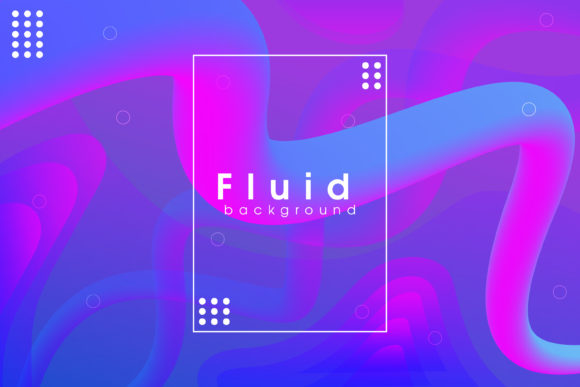
The core distinction of 3D Fluid Vector Background Design lies in its ability to simulate three-dimensional depth without the heavy computational load associated with real-time 3D rendering engines. These designs typically employ gradients, shadows, and highlights within a vector framework to create the illusion of volume. The result is a surface that appears to ripple, flow, and interact with light, yet remains composed entirely of editable paths rather than pixels.
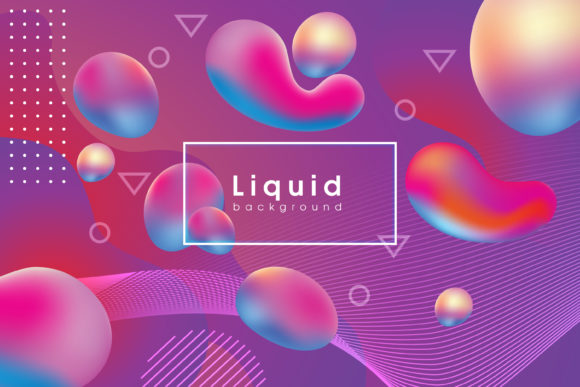
This technology allows for the creation of "Memphis and abstract shapes" that define modern trends. The aesthetic often features bold, colorful blobs and organic forms that float against one another, creating a sense of rhythm and movement. Because the underlying structure is vector-based, the design maintains perfect sharpness regardless of the output size. This is a significant advantage over standard photography or raster graphics, where stretching an image to fit a large banner results in pixelation and blurriness.
Furthermore, the integration of vibrant color palettes is seamless. In a RGB Color Mode, these backgrounds can utilize thousands of distinct hues without banding or loss of fidelity. The ability to adjust hue, saturation, and luminosity on individual fluid shapes allows for rapid iteration during the creative process. This flexibility makes the medium particularly suitable for branding projects where color consistency across various media—from small icons to massive billboards—is non-negotiable.
Comparing Formats: Vector vs. Raster and Static vs. Animated
When selecting a background asset, professionals often weigh the benefits of vector formats against raster alternatives like JPEGs or PNGs. While raster images are ubiquitous and easy to use, they are inherently limited by their fixed resolution. A standard high-definition image might look excellent on a screen but will fail when printed or scaled up for a large display. In contrast, 3D Fluid Vector Background Design files, typically saved in Adobe Illustrator AI formats, resolve perfectly at any dimension.
The comparison extends to animated backgrounds. Many users seek moving wallpapers for their devices, which usually require video files (MP4, GIF) or WebGL implementations. While animation adds a layer of engagement, it introduces file size constraints and compatibility issues. Vector fluid backgrounds offer a middle ground: they can remain static for maximum performance and compatibility, or they can be exported as a sequence of frames to create smooth animations if needed. This dual-purpose capability provides a strategic advantage for teams working with limited resources.
Another point of comparison is the level of customization. Traditional stock photos are often locked; you cannot easily change the color of a flower or the shape of a cloud without complex photo editing. With fluid vector designs, every element is a separate object. A designer can swap a blue fluid shape for a red one, alter the curvature of a wave, or rearrange the composition entirely using standard vector tools. This editability reduces the need for multiple variations of a single concept, streamlining the workflow for campaigns that require A/B testing or localized adaptations.
Technical Specifications and Workflow Integration
For those integrating these assets into professional workflows, the technical specifications are a primary consideration. High-quality 3D Fluid Vector Background Design packages are often delivered as Adobe Illustrator AI Files. This ensures that the source data is fully accessible for modification. The inclusion of both JPG and PNG exports alongside the native AI file caters to different stages of production, allowing for quick previews while preserving the master file for future edits.
The resolution standards for these assets are robust. Designs sized at 3000×2000 Pixels provide ample detail for high-resolution displays, including Retina screens found on modern MacBooks and iPhones. While some might argue that 72 DPI is standard for web use, the vector nature of the file means the DPI setting is largely irrelevant to the final output quality. The image will scale based on the device's pixel density, ensuring that a mobile screen or an iPhone X wallpaper looks pristine.
Compatibility with software updates is another factor. Professional-grade vector files are designed to be compatible with current versions of Adobe Illustrator and similar vector-editing suites. This forward-thinking approach ensures that the investment in the asset remains valid even as software evolves. Users do not need to worry about proprietary formats becoming obsolete, a common issue with specialized 3D modeling files that require specific, expensive rendering engines.
Evaluating Use Cases: When to Choose Fluid Vectors
Deciding to use 3D Fluid Vector Background Design depends heavily on the intended application. For presentations, these backgrounds excel because they can be projected onto large screens without losing clarity. The abstract nature of the shapes allows them to serve as a neutral yet engaging backdrop for text-heavy slides, drawing attention without overwhelming the content. The ability to match brand colors instantly makes them ideal for corporate decks and pitch materials.
In the realm of personalization, such as HD walls wallpaper or desktop wallpapers, the fluid aesthetic offers a contemporary look that stands out against cluttered interfaces. The scalability ensures that whether a user has a compact laptop screen or a massive ultrawide monitor, the image adapts perfectly. Additionally, the lightweight nature of vector data (when used correctly) can contribute to faster loading times on websites compared to heavy, uncompressed photographic backgrounds.
However, there are scenarios where this style may not be the optimal choice. If a project requires photorealism, such as a realistic landscape or a portrait-focused advertisement, fluid vectors will appear too stylized and artificial. Similarly, for print applications requiring CMYK color profiles, the RGB-native nature of many digital-first vector assets may require conversion, which can sometimes lead to slight shifts in color vibrancy. In such cases, a dedicated print-ready raster file might be more appropriate.
Tradeoffs and Decision Factors
No design solution is without tradeoffs. The primary limitation of fluid vector backgrounds is the learning curve required to manipulate them effectively. While the files are customizable, a user unfamiliar with vector editing software may find the process daunting compared to simply swapping out a JPEG. The time investment in customizing shapes and colors can be higher than selecting a pre-made static image, though the long-term value of having a reusable, editable template often justifies this effort.
There is also the consideration of file management. While the source AI files are efficient, exporting high-resolution variants for various platforms requires careful organization. Professionals must balance the convenience of a single scalable file against the logistical need to generate specific dimensions for different social media platforms or ad networks. Despite this, the versatility of the format generally outweighs the administrative overhead.
Ultimately, the decision to adopt 3D Fluid Vector Background Design should be driven by the need for adaptability and visual impact. For brands looking to establish a modern, dynamic identity, or for individuals who want a visually stunning, personalized digital environment, these assets provide a powerful toolkit. They represent a synthesis of artistic expression and technical efficiency, offering a path to high-quality visuals that can evolve alongside the needs of the project.
By understanding the strengths of fluid vectors—their infinite scalability, ease of customization, and modern aesthetic—users can make informed choices that enhance their visual communication. Whether for a sleek mobile screen interface or a grand presentation stage, the right background sets the tone for the entire experience. As digital consumption continues to prioritize visual engagement, the role of adaptable, high-fidelity design elements like these will only grow in importance.